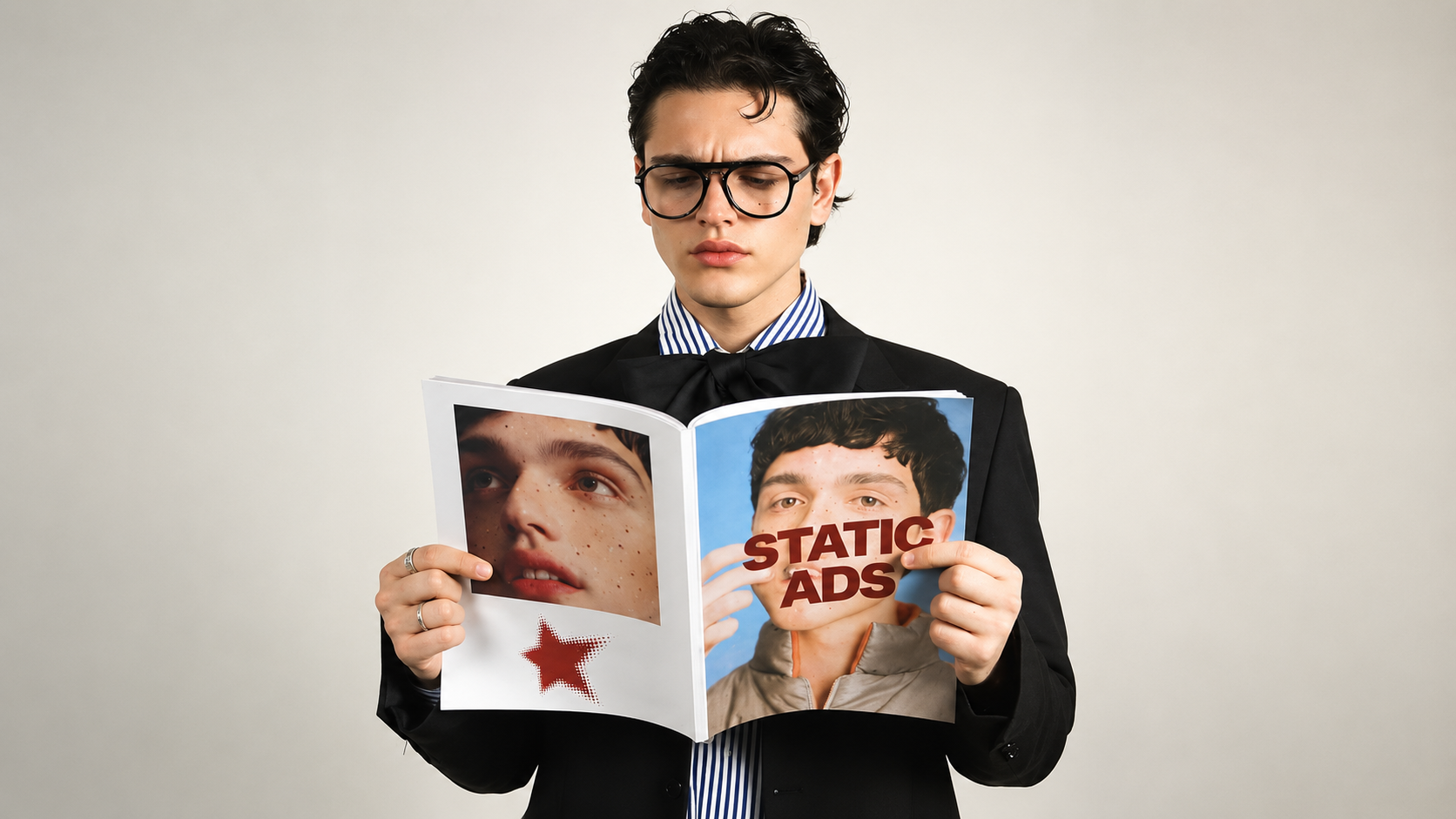
In a world of fragmented attention and infinite content, great static ads still matter because they stop the scroll through strong visual storytelling, while recurring brand influencers build familiarity and trust over time. The brands that win will not simply produce more content, but those that will build memorable systems where visual precision and trusted personalities continuously reinforce one another.
The Video-First Assumption Is Incomplete
For years, marketing conversations have been dominated by one assumption that video is king.
Short-form content exploded. Reels reshaped attention spans. Creator-led storytelling became mainstream. Algorithms increasingly rewarded movement, engagement, and entertainment. As platforms shifted toward video-first ecosystems, many brands quietly reached the same conclusion that static ads no longer matter. While this assumption feels intuitive, it is, however, increasingly incomplete.
Because in a digital environment defined by infinite scrolling, fragmented attention, and content saturation, the real challenge is no longer simply producing more content. It is earning attention before it disappears. And ironically, one of the most under-appreciated tools for winning that battle remains the static advertisement.
Static ads do not entail generic carousels or templated graphics overloaded with text. It encompasses carefully directed visual systems designed to interrupt attention instantly, communicate clearly, and create emotional familiarity in a fraction of a second.
At the same time, another misunderstanding, specifically around how brands think about influencers, continues shaping modern marketing. Most companies still treat influencers as a rented distribution. The stronger brands increasingly treat them as trust infrastructure.
These two shifts matter more together than separately. Because increasingly, growth belongs to brands capable of doing two things simultaneously: Winning the scroll and sustaining trust after it.
The Scroll Problem Brands Are Quietly Losing
Consumer attention today behaves differently than it did even five years ago.
Audiences move faster. Feeds refresh endlessly. Algorithms continuously optimize for novelty. Consumers encounter creator content, advertisements, entertainment, memes, product recommendations, and branded storytelling inside the same environment. The result is an economy built around interruption.
As is evident from Deloitte’s Digital Media Trends report, every brand is fighting for the same scarce resource: a few seconds of visual attention. This creates a structural problem for marketers.

The majority of content today is visually forgettable. Feeds are increasingly crowded with over-designed graphics, repetitive formats, exaggerated editing, generic hooks, and creative systems built around imitation rather than differentiation.
As content volume increases, audiences adapt. They scroll faster, filter harder and ignore anything that feels predictable. The challenge has compounded from visibility to memorability.
This is precisely why static ads still matter more than most marketers realise. Because when attention becomes shorter, visual clarity becomes more valuable.
Why Static Ads Still Matter More Than Marketers Admit
In many ways, static ads are misunderstood. Brands often perceive them as lower-value assets compared to cinematic videos or creator content. They are treated as supplementary materials rather than primary growth infrastructure.
But high-performing static ads solve a recurring problem: They compress communication. Unlike video, which unfolds over time, static ads succeed or fail almost instantly. They interrupt scrolling through immediate visual clarity, emotional signaling, compositional hierarchy, and narrative intrigue.
Nielsen’s advertising effectiveness report states that when created properly, a strong static ad communicates the 4W’s and 1H of a product.
- What is the product?
- Why does it matter?
- How should it feel?
- Why should the customer care?
All within seconds.
This matters enormously because most digital environments reward cognitive ease. Consumers make subconscious decisions rapidly. A visually confusing advertisement creates friction. A clear visual hierarchy creates comprehension.
The strongest static ads, therefore, are those that feel intentional, while simultaneously being aesthetically pleasing. Every visual element performs a role. The lighting directs attention, composition creates focus, typography guides reading behaviour, emotional cue creates resonance and the product remains visually central without feeling transactional.
The paradox is increasingly clear: The shorter attention spans become, the more important visual precision becomes.
When consumers scroll quickly, brands have fewer opportunities to explain themselves. The image must speak before the copy does.
What Actually Makes a Static Ads Stop the Scroll
Most brands misunderstand why certain advertisements outperform others. They assume success comes from visual complexity. However, in reality, effective static advertising often comes from restraint.
The strongest static ads typically share a few characteristics. First, they establish visual hierarchy immediately. The viewer instinctively knows where to look first, second, and third.
Second, they create emotional tension. This does not necessarily mean drama. It means intrigue, aspiration, familiarity, curiosity, and desire. A sense that something emotionally meaningful exists within the frame.
Third, they maintain compositional clarity. Cluttered visuals slow comprehension while strong visuals reduce cognitive effort.
Fourth, they remain unmistakably branded without becoming overtly promotional. Consumers resist advertisements that feel like advertisements. The strongest static systems feel editorial, cinematic, culturally relevant, and emotionally intentional.
And finally, great static ads tell incomplete stories. They invite curiosity. The best-performing visuals often create a psychological pause: “What is happening here?”
That pause matters. Because in modern digital ecosystems, attention is often won before logic begins.
Why Most Brands Misunderstand Influencers
At the same time, many businesses continue making another expensive mistake. They misunderstand what influencers are actually supposed to do.
Most brands still operate through transactional logic. A creator is hired and a sponsored post is published, owing to which, traffic spikes briefly. Then, attention disappears. The process repeats again with another creator. This model produces reach but it rarely creates consistency.
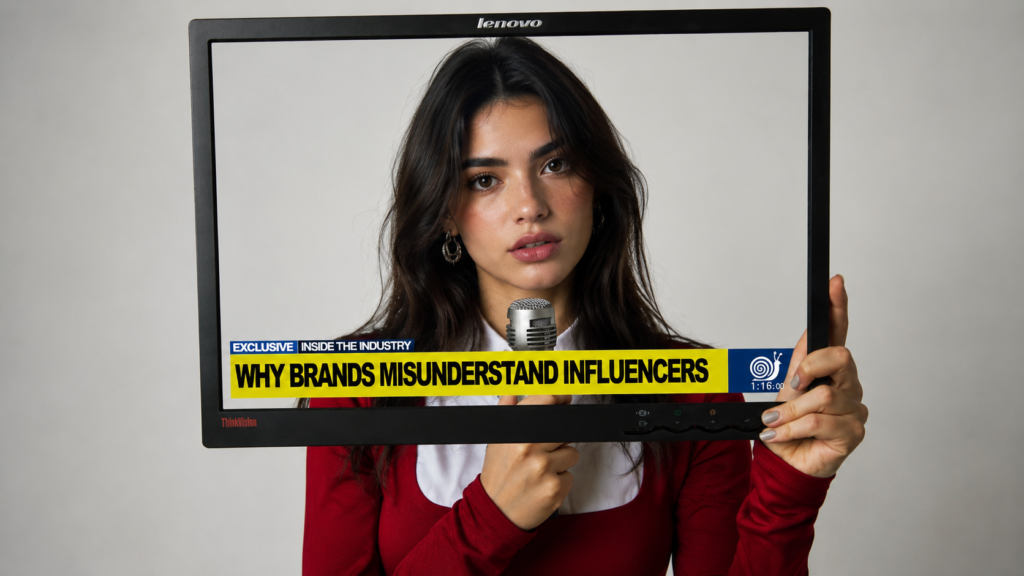
The strongest brands approach influencer marketing differently. They optimize for familiarity, not novelty, because trust compounds through repetition.
Consumers rarely build meaningful affinity from isolated exposure. Trust develops when personalities become recognisable, recurring, and emotionally familiar over time. In many ways, the most successful influencer strategies resemble brand systems rather than partnerships.
The creator becomes part of the narrative architecture itself. They are not simply promoting the brand but increasingly embodying it. This is why long-term creator relationships consistently outperform one-off activations.
Familiarity reduces skepticism, recognition accelerates trust and trust, in turn, reduces acquisition friction.
The Rise of Brand Influencers
Increasingly, brands are beginning to move beyond traditional influencer models altogether. Instead of repeatedly borrowing attention, they are beginning to build owned personalities.
Sometimes these are recurring creator partnerships. Sometimes they are ambassador ecosystems. Increasingly, they may become synthetic. As elucidated in the Ipsos report, virtual influencers, AI-native personalities, recurring brand characters, and digitally directed creators represent a larger shift happening underneath modern marketing: The movement from campaign-based attention toward narrative continuity.
A recurring personality creates emotional familiarity at scale, something traditional advertisements struggle to replicate. Audiences return not only for products, but for stories, identity, humour, aesthetics, and consistency.
The creator becomes media infrastructure, the personality becomes intellectual property and over time, the ecosystem compounds.
Why Static Ads and Brand Influencers Work Best Together
The strongest modern brands increasingly combine both systems.
Static ads stop attention, influencers sustain trust and narrative continuity reinforces memory. Together, they create compounding familiarity.
A visually strong static ad interrupts scrolling and establishes emotional positioning quickly. A recurring creator or brand personality deepens trust over time. Each reinforces the other.
This matters because modern growth increasingly depends less on isolated campaigns and more on cumulative familiarity. The objective is no longer simply generating clicks. It is becoming remembered.
Where Rivoq Fits In
At Rivoq Labs, this is increasingly how we think about modern brand growth.
We believe performance today sits at the intersection of visual precision, narrative consistency, and recurring audience trust.
That means creating static advertisements designed intentionally for attention, while simultaneously building influencer ecosystems, synthetic personalities, and modular storytelling systems that sustain familiarity beyond a single campaign.
Because in an environment saturated with content, producing more is rarely the answer. Producing more memorable systems is.
The Bottom Line
The future of marketing is unlikely to belong to brands producing the highest volume of content. It will belong to brands that understand how attention actually works.
Static ads still matter because they stop the scroll, influencers matter because they sustain trust. And the strongest brands increasingly build systems where both continuously reinforce one another.In an age of infinite content, brands will not win by being louder. They will win by becoming more memorable.