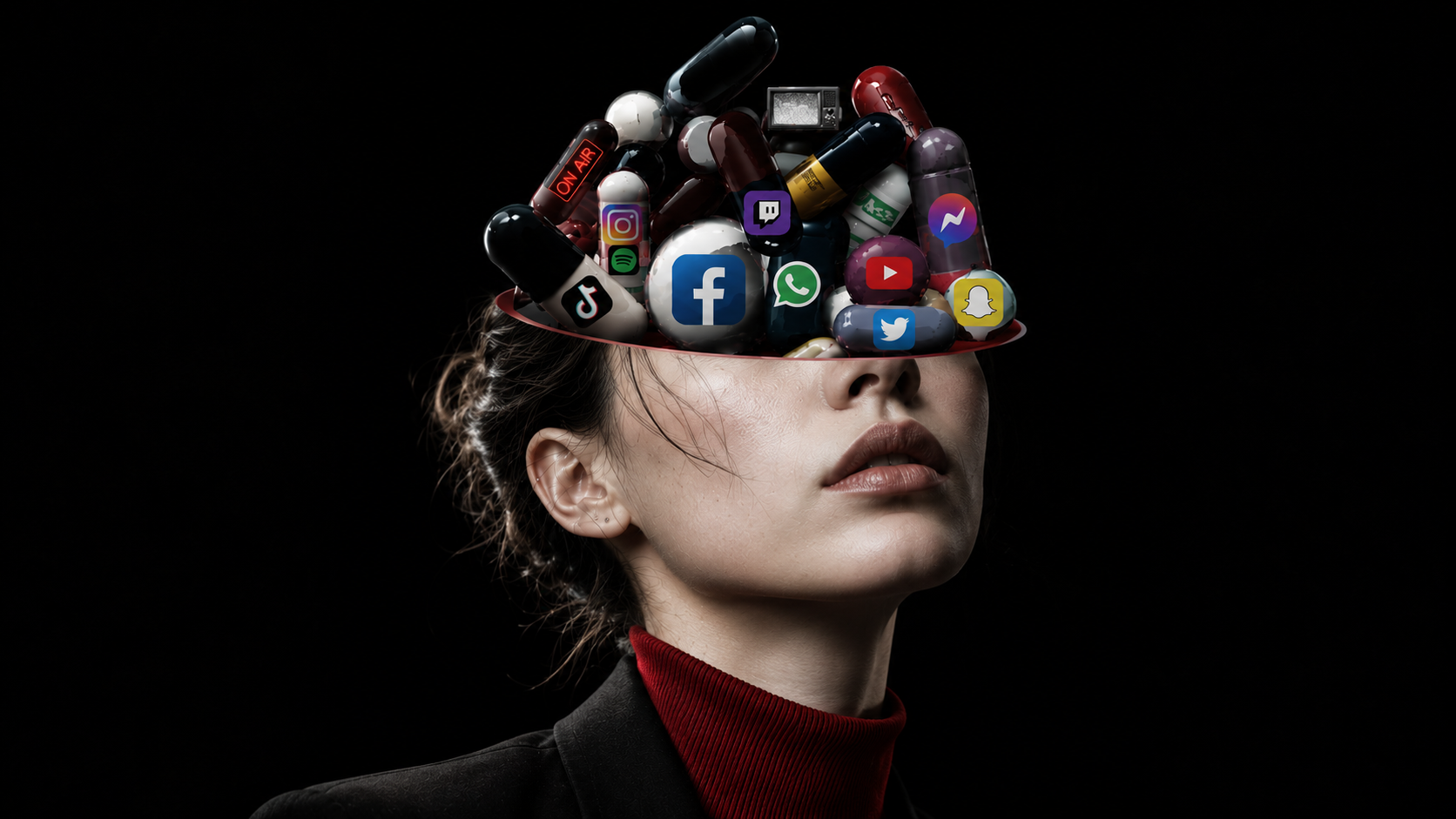
As customer acquisition costs rise and attention becomes increasingly fragmented, the next generation of brands will shift from renting attention to building owned media ecosystems powered by synthetic personalities, recurring narratives, and digital IP. Discover why future companies will behave more like media companies and how AI-native storytelling is redefining long-term brand growth.
The End of Attention Arbitrage
For most of modern advertising history, brands grew by renting attention.
They purchased visibility through television commercials, digital advertisements, influencer partnerships, billboards, sponsorships, and increasingly expensive paid media ecosystems. Growth largely depended on a company’s ability to consistently buy access to audiences at scale. If a campaign performed well, the brand grew. If attention declined, budgets increased. The underlying logic remained the same: attention was rented, not owned.
For years, this model worked. However, the economics of attention are beginning to change.
Customer acquisition costs continue to rise across platforms. Organic reach is increasingly unpredictable. Audiences are fragmented across social channels, creator ecosystems, streaming platforms, communities, and niche digital cultures. The result is a marketing environment where brands are competing not only against competitors, but against creators, entertainment platforms, influencers, memes, algorithms, and culture itself.
This is quietly reshaping one of the foundational assumptions of marketing.
The future growth advantage may no longer belong to brands that simply advertise better. It may belong to brands that behave more like media companies. And increasingly, those media ecosystems may not be powered entirely by humans. They may be synthetic.
The Paid Attention Model Is Quietly Breaking
Most businesses today still operate through a campaign-driven logic.
A brand launches a product, runs advertisements, collaborates with creators, builds awareness for a period of time, and then repeats the cycle again. Between campaigns, visibility often declines. Attention weakens. Momentum resets.
The problem is that consumer attention no longer behaves episodically.
Digital audiences exist in continuous environments. They scroll daily, consume short-form content constantly, build familiarity not through isolated advertisements but through repeated exposure, recurring personalities, and ongoing narratives.

This creates a structural challenge for brands. Traditional advertising creates spikes of visibility. Modern digital environments reward continuity. At the same time, paid acquisition is becoming increasingly expensive. Platforms continue absorbing larger portions of marketing budgets while competitive intensity rises. In many sectors, customer acquisition costs have increased substantially over the last decade, forcing brands to spend more simply to maintain visibility.
This begets an uncomfortable question: What happens when the cost of renting attention becomes unsustainably high? The answer increasingly points toward ownership, not of media spend, but ownership of audiences, narratives and recurring attention.
This is where the idea of the synthetic brand begins to matter.
The Rise of Synthetic Brands
Artificial intelligence accelerates this transition dramatically. Historically, building entertainment-like ecosystems around a brand was expensive and operationally difficult. Maintaining recurring characters, producing ongoing storylines, developing creator-style content, and sustaining audience engagement required large creative teams and constant production effort.
AI changes those economics. Brands can now increasingly create synthetic personalities, virtual ambassadors, recurring digital characters, AI-native creators, and scalable narrative systems capable of appearing continuously across platforms.
These are not temporary campaign assets. They are persistent digital entities. A synthetic personality can appear simultaneously across Instagram, YouTube, short-form video, advertisements, livestreams, educational content, product explainers, and branded storytelling without suffering from scheduling constraints, talent turnover, licensing disputes, or creative inconsistency.
More importantly, these characters do not merely market products. Research from Deloitte shows that over time, they accumulate familiarity. Familiarity creates trust. Trust compounds into audience attention. And audience attention becomes one of the most defensible assets a business can own.

Nielsen’s trust research found that 71% of consumers trust influencer recommendations and placements, validating your argument that future brand growth increasingly depends on recurring trusted personalities rather than one-off advertisements.
This is why virtual influencers, AI entertainment, and digital personalities are attracting growing attention. The opportunity is not simply lower production cost, but building scalable intellectual property.
A well-designed synthetic brand character is not merely a marketing tool. It can simultaneously function as a creator personality, brand ambassador, entertainment asset, storytelling device, licensable intellectual property, and eventually, an independent audience ecosystem. The distinction between marketing and media begins to blur.
From Attention-Driven Campaigns to Media Ecosystems
The next generation of companies will increasingly think beyond campaigns. Instead of repeatedly asking: “How do we launch our next ad?” The better question becomes: “How do we build an ecosystem audiences return to voluntarily?”
This changes how brands approach storytelling. Rather than producing isolated advertisements, brands may increasingly develop recurring narrative worlds where products exist inside ongoing stories.
A travel company could build recurring personalities documenting aspirational experiences across destinations. A beauty brand could create synthetic creators educating audiences around skincare transformations, confidence, and identity. A fashion company could develop digital personalities embodying different aesthetics and lifestyles.
Every interaction becomes part of a larger emotional universe. This creates a flywheel effect. Narratives create attention. Attention builds audience familiarity. Audience familiarity reduces customer acquisition friction. Owned audiences improve monetization efficiency. And over time, the ecosystem itself becomes an appreciating asset.
Platforms such as YouTube, Instagram, podcasts, short-form video, newsletters, and owned communities increasingly become distribution infrastructure for brand ecosystems rather than isolated marketing channels.
In this model, content is no longer a cost centre. It becomes a compounding asset.
What Winning Brands Will Do Differently
The companies that benefit most from this shift are unlikely to treat synthetic branding as novelty. They will approach it systematically.
Rather than producing isolated creator campaigns, they will build recurring personalities. Instead of episodic storytelling, they will create narrative continuity. And rather than platform-specific content, they will orchestrate cross-platform ecosystems where stories evolve consistently across formats.
Most importantly, they will think long-term. The real value of synthetic brands compounds over time because audience familiarity compounds over time.
The objective is not short-term virality. It is sustained cultural relevance.
Where Rivoq Fits In
At Rivoq Labs, this is increasingly how we think about the future of brand growth.
We believe the next generation of companies will not simply create advertisements. They will build directed media ecosystems powered by cinematic storytelling, synthetic personalities, scalable content systems, and recurring narratives designed to grow with the brand.
AI allows brands to produce continuously. Creative direction ensures that continuity builds identity rather than fragmentation.
Our approach increasingly sits at the intersection of cinematic AI production, synthetic brand identity, narrative systems, virtual personalities, and scalable content ecosystems designed not simply for visibility, but for long-term brand equity.
Because the future opportunity is larger than content production alone. It is audience ownership.
The Bottom Line
Advertising is not disappearing. But the economics of growth are changing.
As customer acquisition costs rise and attention becomes increasingly fragmented, brands relying exclusively on rented media may find themselves operating inside increasingly fragile systems.
The companies that thrive will likely behave differently. They will build recurring narratives instead of isolated campaigns. They will create audiences rather than simply acquire customers. And increasingly, they will treat intellectual property, entertainment, and storytelling as core business infrastructure.
The future brand is not a company. It is a media ecosystem.