Why Directed AI Content Is the New Gold Standard for Brand Advertising
The traditional production model is shifting. Location scouts, crew coordination, model availability, weather delays, and reshoot budgets: for DTC and mid-market brands, the overhead of a physical photo shoot has become increasingly difficult to justify. H&M is building digital twins of its models. Mango launched an entire campaign generated by AI. Lululemon just hired its first chief AI and technology officer. The infrastructure around brand content is being rebuilt, and directed AI content is on the rise. That much is clear.
But the more interesting question is not whether brands will stop booking sets. It is what they will build in their place, and whether the standard of work will rise or collapse in the process. That is the real conversation worth having.
The Shift Is Real. The Opportunity Is Misunderstood.
When a brand booked a traditional photo shoot, creative direction was embedded in the process by default. A photographer understood how to motivate light. A stylist managed colour and texture. A director of photography composed the frame with spatial depth: foreground, midground, and background, each serving a distinct visual purpose. The production infrastructure was expensive and slow, but it carried an invisible layer of craft that most teams never had to think about.
Now that the infrastructure is changing, that layer of craft is no longer automatic. It has to be intentional. And that is where the real opportunity lives: not in producing content faster or cheaper, but in applying the same visual discipline that defined great traditional advertising to a production model that is no longer constrained by physical logistics.
The brands that recognise this distinction early will not just keep up. They will set the new standard for what brand content looks and feels like.
“The shift is not from physical to digital. It is from infrastructure-dependent craft to intention-dependent craft. The brands that treat AI as a camera, not a shortcut, will define the next era of advertising.”
Why Direction Matters More Now, Not Less
AI tools will generate exactly what you ask for, including every mistake you did not know you were making. An image with flat frontal lighting, crushed shadow detail, and an oversaturated colour palette is not a tool failure. It is a direction failure. The technology executed faithfully. The brief simply did not ask for enough.
This is the nuance the industry is still catching up to. The production method changed. The need for creative direction did not. If anything, it intensified. When a photographer stood on set, they made dozens of micro-decisions about light direction, shadow contrast, and colour temperature instinctively. In AI-directed production, each of those decisions must be made deliberately: is the light source motivated? Is the colour palette restrained enough to feel like real film stock, or does it read as a digital filter? Does the frame have genuine spatial depth, or is the subject floating on a flat background?
The brands that approach this with discipline are producing work that genuinely competes with high-end traditional production. Not because the tools are magic, but because the people directing them understand what a cinematic frame actually requires.
What the New Standard Looks Like
The difference between AI content that audiences trust and AI content they instinctively scroll past is not resolution or rendering quality. It is a craft. Research from Raptive found that consumer trust drops significantly when something is perceived as AI content. But that perception is not triggered by the technology itself. It is triggered by the absence of the visual cues that signal intentionality: motivated lighting, restrained colour, compositional depth, and real texture in skin, fabric, and surfaces.
When those elements are present, audiences respond to the content on its own terms. They engage with it the same way they engage with beautifully shot traditional work, because the visual language is the same. The production method is different. The standard is not.
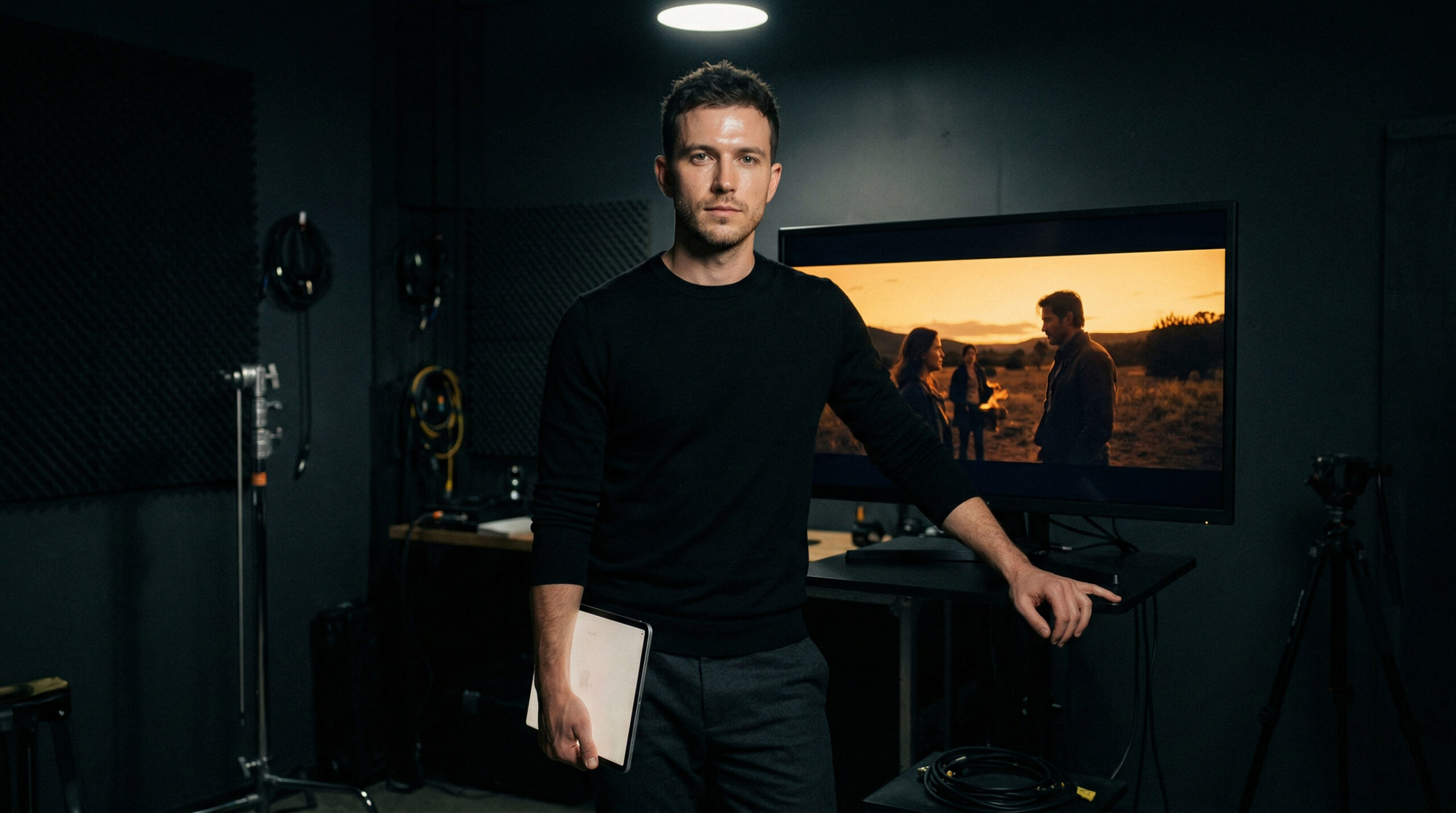
This is the approach behind everything we produce at Rivoq Labs, from brand campaigns down to directed characters like Clara Voss, where every frame is held to the same cinematic standard: light that has a source, colour that belongs to a real palette, and depth that places the viewer inside the scene rather than in front of a screen.
The Market Is Opening, Not Closing
What we are seeing in 2026 is not the end of premium brand content. It is the beginning of a new category. On one side, high-volume AI content that competes on speed and output. On the other hand, directed AI production competes on perception, trust, and visual identity, freed from the logistical constraints that once made that level of work accessible only to the largest budgets.
That second category is where the opportunity is richest. Brands that once could not afford a cinematic campaign can now access that standard of work without the overhead of a traditional set. This is an outcome of well-directed AI content. Brands that already invested in premium content can now maintain that standard at a pace and consistency that was previously impossible. The ceiling has not lowered. The floor has risen.
We explored the broader case for this shift in our earlier piece, AI Models in Advertising: Why Brands Are Making the Switch. But the question has moved beyond whether to make the transition. It is now about the standard of work you produce once you do.
The Production Model Is Changing. The Standard Should Rise With It.
By 2027, the majority of DTC and mid-market brands will produce the bulk of their visual content without booking a traditional set. The photo shoot, as a default operational requirement, is ending. But the visual standards that made great advertising great, motivated light, disciplined composition, restrained colour, and spatial depth, are not relics of the old model. They are the foundation of the new one.
The brands that thrive in this transition will be the ones that raise their visual standard as they change their production method, not the ones that sacrifice one for the other.
At Rivoq Labs, that is exactly how we work. We do not generate. We direct. Every light source is motivated, and every frame is composed. AI is the camera. Creative direction is the craft.
The production model is new. The standard is not. And for the brands ready to hold that standard, the opportunity has never been larger.
We use cookies to enhance your experience and analyze site traffic. By continuing, you agree to our Privacy Policy.